
Atlanta's Heat and Rainfall Create a Lawn That Grows Faster Than Most Homeowners Can Keep Up
What Georgia's Humid Subtropical Climate Actually Demands from a Mowing Schedule
Atlanta sits in a humid subtropical zone where warm-season grasses like Bermuda and Zoysia can add an inch or more of growth per week during June and July. When mowing frequency falls behind that pace, grass blades become stressed by scalping during the next cut — removing more than one-third of the blade height at once causes yellowing, weakens root density, and opens turf to weed encroachment. Eye Candy Lawns structures weekly and bi-weekly lawn care plans specifically around Atlanta's growing calendar, not a generic national schedule.
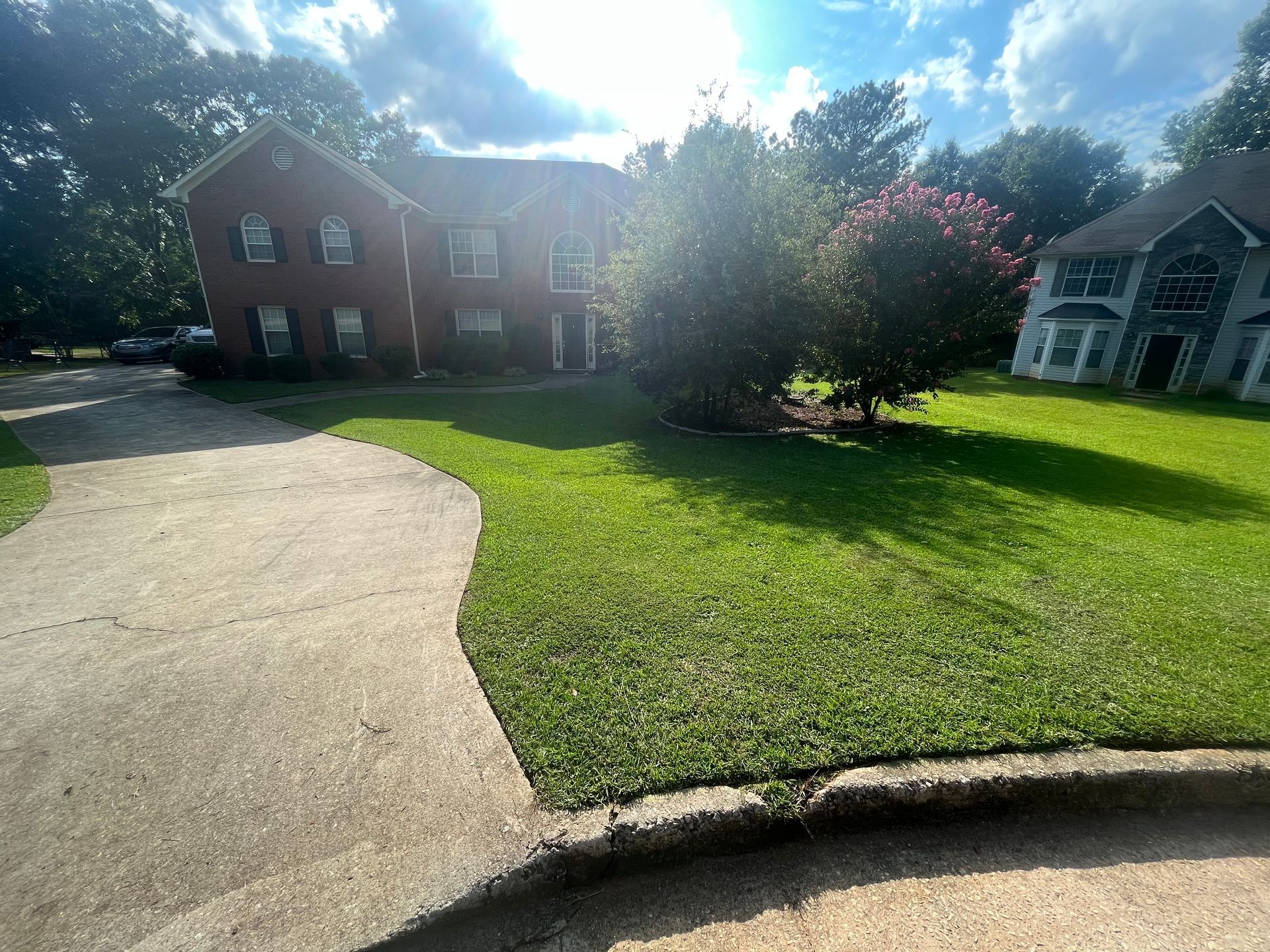
Each visit includes mowing at the correct height for the turf variety present, string trimming around obstacles and bed borders, and edging along driveways and sidewalks so grass doesn't creep onto hardscape surfaces. The difference shows immediately: clean cut lines, uniform blade height across the entire yard, and edges sharp enough that turf and pavement meet at a defined vertical wall rather than a ragged slope.
How a Recurring Service Schedule Prevents the Problems That Build Up Between Cuts
In Atlanta neighborhoods, skipping even one mowing cycle during peak summer growth can push grass past the recoverable cutting height, forcing a hard cut that leaves brown tips visible for days. A locked-in recurring schedule eliminates that risk by ensuring the lawn never accumulates more growth than can be removed in a single pass without stressing the turf. Consistent mowing height also compresses the thatch layer, which improves water penetration and reduces the moisture-trapping conditions that favor fungal disease in Atlanta's humid summers.
Professional-grade rotary and reel equipment produces a cleaner shear cut than consumer mowers, which reduces the torn blade ends that turn white and give lawns a dull appearance between visits. Blades are maintained sharp, and crews adjust cutting height seasonally — slightly higher in late summer heat to shade roots, lower in cooler months to reduce thatch accumulation. After every visit, clippings are cleared from driveways, beds, and walkways so the property is ready to use immediately.
If you need consistent lawn care in Atlanta that prevents overgrowth problems before they start, reach out today to lock in a schedule before peak growing season fills the calendar.
What Breaks Down When Lawn Maintenance Becomes Inconsistent
Irregular mowing creates a chain of problems that compound over the season. Understanding what fails — and why — helps Atlanta homeowners recognize how quickly a well-maintained lawn can deteriorate without a reliable service plan.
- Scalping damage occurs when overgrown grass is cut too short in one pass, browning the turf and exposing soil to weed germination
- Thatch buildup thickens when clippings are left on tall grass, blocking water and fertilizer from reaching root zones
- Edges blur within days on Atlanta properties where warm-season grass spreads laterally into driveways and bed borders
- Uneven growth patterns develop when some areas are shaded or irrigated differently and cutting height is never adjusted to compensate
- Consumer mower blades dull quickly in Georgia's dense summer growth, tearing rather than cutting and leaving turf vulnerable to disease entry
Each of these failures is preventable with a scheduled lawn care plan calibrated to Atlanta's growing conditions. Contact us today to set up weekly or bi-weekly service that keeps your yard ahead of the season rather than catching up to it.