
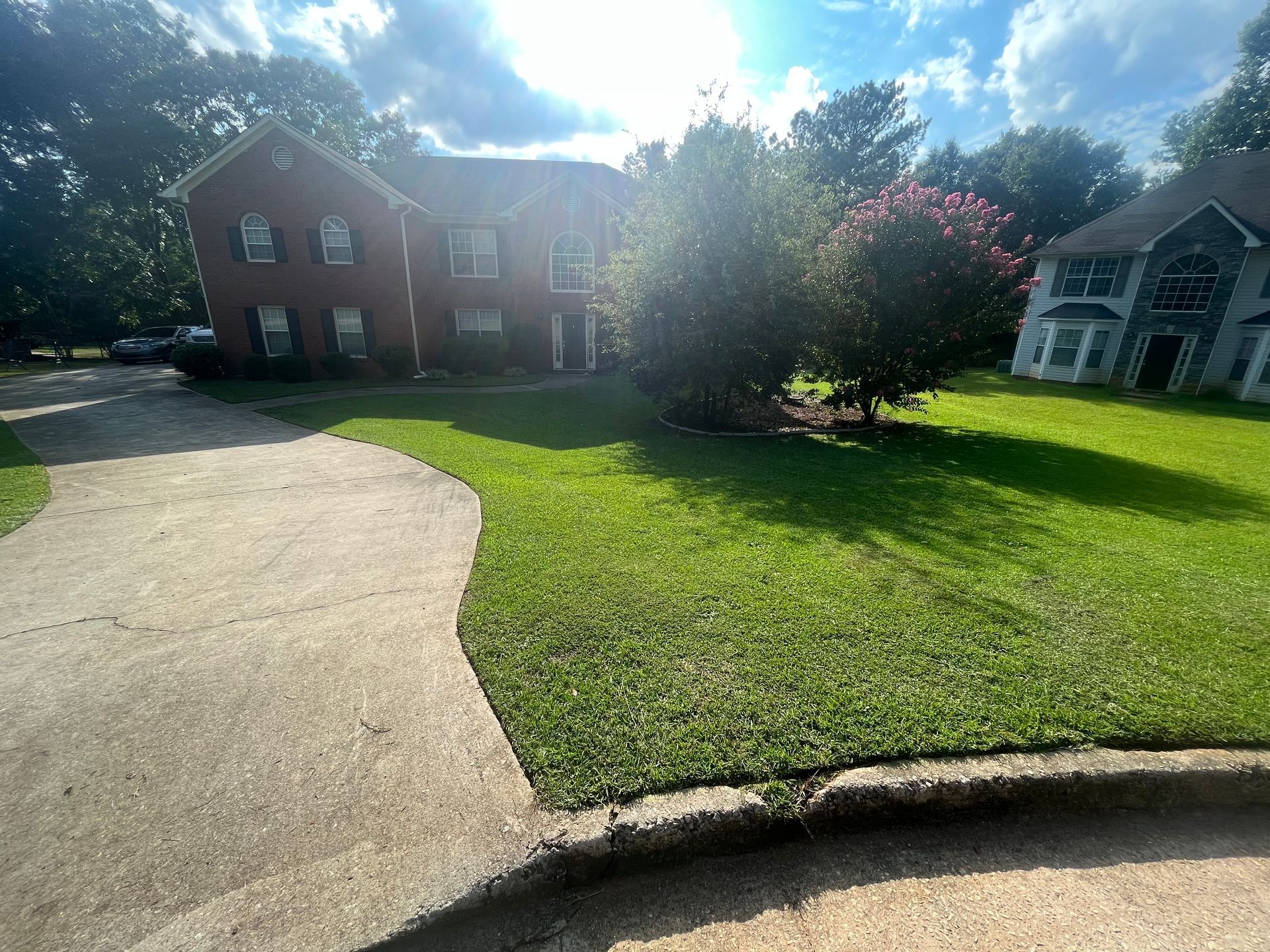
Most Lawn Services Mow and Move On — Edge Trimming in Forest Park Is the Detail That Actually Finishes the Job
Why the Line Between Grass and Pavement Determines How the Whole Yard Looks
A mowed lawn with unedged sidewalks still looks unfinished — and in Forest Park, where warm-season grasses like Bermuda spread laterally as aggressively as they grow vertically, that overhang onto driveways and walkways reappears within days of a basic mow. The mistake most homeowners make is treating edging as optional detail work rather than recognizing it as the structural element that gives a yard its defined shape. Without a clean vertical cut between turf and hardscape, grass gradually colonizes cracks in pavement, widens onto sidewalk surfaces, and softens the borders that separate lawn from mulch beds.
Eye Candy Lawns uses dedicated edging equipment — not a string trimmer held at an angle — to create a sharp, vertical soil-to-pavement wall along driveways, sidewalks, and property borders. That distinction matters: a rotary edger or stick edger cuts straight down through the grass and thatch layer, creating a defined channel that holds its shape far longer than the angled scrape a trimmer produces. The visible difference after professional edging is immediate — property lines look intentional, walkways look wider, and the entire yard reads as actively maintained rather than casually kept.
What Proper Edging Technique Looks Like — and Why It Holds Longer
The right approach to edge trimming in Forest Park starts with understanding how Georgia's warm-season grasses spread. Bermuda, in particular, sends out stolons — above-ground runners — that cross onto pavement within a single growing week. A clean edging cut severs those runners at the turf boundary and removes the soil shelf they were using to anchor into concrete or asphalt cracks. When edging is done at the correct angle and depth, regrowth takes longer to re-bridge the gap, meaning the defined line stays visible for more of the interval between service visits.
For Forest Park properties with mulch beds alongside driveways or walkways, edge trimming also prevents grass from invading the bed and competing with ornamental plantings for water and nutrients. That clean separation between turf and mulch is one of the clearest visual signals that a landscape is professionally maintained rather than DIY-managed. Services can be scheduled as a standalone appointment for properties that only need edge work, or incorporated into a full mowing and trimming plan so every visit leaves the yard completely finished.
Contact us today to schedule edge trimming in Forest Park and see the difference a properly defined border makes across every walkway and property line on your lot.
How to Evaluate Whether Your Current Edging Is Actually Working
Not all edging produces the same result, and the difference becomes obvious within a week of the last cut. Use these criteria to assess whether your current approach — or your current provider — is delivering edge work that actually holds.
- A properly edged sidewalk should show a vertical cut face, not a sloped or angled scrape — the edge should look like a clean wall, not a worn slope
- Grass should not be overhanging the pavement surface after edging; any overhang indicates the cut wasn't made at the correct boundary
- Forest Park properties with Bermuda lawns should see the defined edge hold for at least five to seven days before lateral runners begin recrossing onto hardscape
- Mulch bed borders should have a visible separation channel between turf and bed material — without it, grass roots continue advancing beneath the surface
- After edging, debris from the cut should be removed from walkways — clippings or soil left on pavement indicate the service wasn't completed fully
If your current edging fails any of those checkpoints, it's worth evaluating whether the right technique and equipment are being applied. Contact us to schedule edge trimming in Forest Park with the tools and method that produce results that last.