
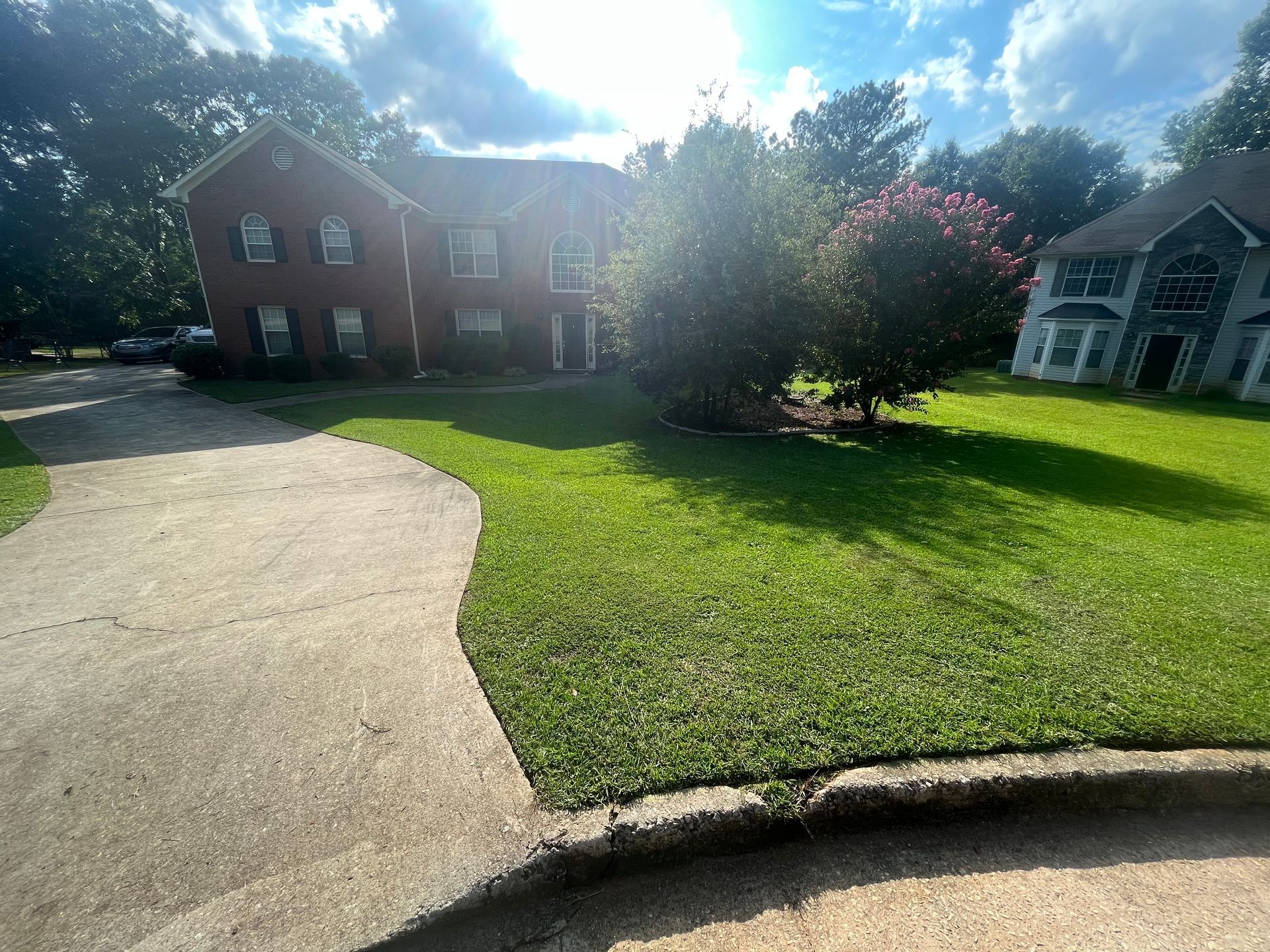
Jonesboro's Warm Climate Keeps Weed Pressure Active from February Through November — Reactive Treatments Can't Keep Pace
How Seasonal Timing Determines Whether Weed Control Actually Works in Henry County Lawns
In Jonesboro, the weed management calendar starts earlier than most homeowners expect. Winter annuals like henbit and chickweed begin germinating in late fall when soil temperatures drop below 70°F, establishing root systems through winter before exploding into visible growth by March. By the time those plants are noticeable, they've already been growing underground for months — and spot-treating them after germination is significantly less effective than blocking them with pre-emergent applications timed to the Georgia soil temperature curve. Eye Candy Lawns structures weed control programs around that biology, not around what's currently visible in the yard.
Jonesboro's position in Henry County, south of I-675 and surrounded by a mix of established residential neighborhoods and properties with open adjacent lots, means wind-dispersed weed seeds arrive consistently from neighboring spaces. That constant seed pressure makes one-time treatments insufficient — lawns that receive a single application in spring and no follow-up typically show significant weed re-establishment by July. Ongoing weed control visits track germination cycles and apply the right intervention at the right time, so control remains effective across the full growing season rather than just for a few weeks after each treatment.
Why Pre-Emergent Timing and Follow-Up Visits Determine Long-Term Lawn Health
Pre-emergent herbicides work by creating a chemical barrier in the soil that prevents germinated seeds from developing a root system — but that barrier degrades over time, typically losing effectiveness within eight to twelve weeks depending on rainfall and soil composition. In Jonesboro's humid climate, heavy rain events can accelerate pre-emergent breakdown and create windows where a new generation of seeds can germinate before the next scheduled application. Follow-up visits close those windows and address any broadleaf or grassy weeds that established before the barrier was in place.
Properties with shaded areas under mature trees or low-drainage zones near downspouts are particularly vulnerable because turf density is lower in those spots, and bare or thin soil is the easiest environment for weed colonization. Targeted removal in those problem zones, combined with treatments that support turf recovery, shifts the competitive balance back toward grass over the course of a full season. After two to three full growing cycles of consistent weed management, Jonesboro lawns typically show measurably thicker turf coverage in previously bare zones and significantly reduced weed counts at the start of each new season.
Contact us today to schedule weed control and maintenance in Jonesboro before the next germination window opens and establishes another season of invasive growth.
What Goes Wrong When Weed Management Relies on Spot-Treating Alone
Homeowners who rely on visible weeds to trigger treatment are always working one step behind the biology. Understanding the specific failure points of reactive-only weed control helps clarify why a scheduled, season-long approach produces better results for Jonesboro properties.
- Spot treatments applied after germination require higher herbicide concentrations and multiple applications, increasing both chemical exposure and cost compared to pre-emergent prevention
- Mature weeds with established taproots — common in Jonesboro lawns by late spring — survive post-emergent treatments at recommended rates and require repeat visits to fully eliminate
- Seed heads from untreated weeds disperse into adjacent turf and mulch beds before the next visit, resetting the weed population even after effective removal
- Warm-season grassy weeds like crabgrass germinate in Jonesboro as early as late February when soil reaches 55°F, a window that closes before most homeowners notice the problem
- Gaps between mowing and weed control schedules allow weeds to grow tall enough to shade surrounding turf, further weakening grass density in already-thin areas
A proactive weed control and maintenance plan for your Jonesboro property eliminates most of these failure points by addressing the biology before it becomes a visible problem. Reach out today to discuss a treatment schedule matched to your lawn's current weed pressure and turf conditions.